WARNING! A major SAFETY issue facing unsuspecting composite owners who choose to use corrosive to structural metal cleaning chemicals!

Composite cleaning chemicals that contain sodium hypochlorite or are dangerously mixed with chlorine bleach are corrosive to structural metal decking hardware such as connectors & fasteners like stainless, galvanized or coated screws & nails commonly recommended & used in the construction of composites. Manufacturers of these items, used to support & hold together composites generally disclose the "general corrosion risks" of "cleaning chemicals" or the "causes of external attack from chemicals like chlorine bleach" and/or do not recommend corrosive cleaning chemicals come into contact with the items they manufacturer due to the known risks & liabilities. If composites have been previously cleaned with corrosive chemicals, corrosive chemicals have been used to melt snow & ice, or composites are located near corrosive environments, generally close to the ocean, one should have the structure supporting & holding composites together routinely inspected by a professional! Structural metal failure due to corrosion is of great concern, especially since composites are generally designed & warranted to last decades longer than the 10 to 15 year average lifecycle of wood decks. Because the number of deck collapses is on the rise, as the composite decking industry has grown, primarily due to structural metal failure caused by corrosion, yearly inspections become increasingly important, as these components age! We all know what happens when structural metal fails! Since 1999, more than 850+ people have been reported injured & over 20+ documented deaths have occurred due to structural decking failures. Many could have been prevented through the use of non-corrosive cleaning chemicals & routine inspections. Save yourself time, money, risk & liability, choose non-corrosive to structural metal, biodegradable, eco responsible Corte*Clean® for "semi-annual (Spring and Fall) cleaning of your deck", docks or fences & point out these facts to any composite manufacturer whom recommends corrosive cleaning chemicals such as those that contain sodium hypochlorite, acids, phosphates, ice melting salts, etc. Hopefully this will save people from injury or worse. Who knows, it may be you, your children, family members, friends, pets, employees, etc.?

WARNING! A major SAFETY issue facing unsuspecting composite owners who choose to use corrosive to structural metal cleaning chemicals!

Composite cleaning chemicals that contain sodium hypochlorite or are dangerously mixed with chlorine bleach are corrosive to structural metal decking hardware such as connectors & fasteners like stainless, galvanized or coated screws & nails commonly recommended & used in the construction of composites. Manufacturers of these items, used to support & hold together composites generally disclose the "general corrosion risks" of "cleaning chemicals" or the "causes of external attack from chemicals like chlorine bleach" and/or do not recommend corrosive cleaning chemicals come into contact with the items they manufacturer due to the known risks & liabilities. If composites have been previously cleaned with corrosive chemicals, corrosive chemicals have been used to melt snow & ice, or composites are located near corrosive environments, generally close to the ocean, one should have the structure supporting & holding composites together routinely inspected by a professional! Structural metal failure due to corrosion is of great concern, especially since composites are generally designed & warranted to last decades longer than the 10 to 15 year average lifecycle of wood decks. Because the number of deck collapses is on the rise, as the composite decking industry has grown, primarily due to structural metal failure caused by corrosion, yearly inspections become increasingly important, as these components age! We all know what happens when structural metal fails! Since 1999, more than 850+ people have been reported injured & over 20+ documented deaths have occurred due to structural decking failures. Many could have been prevented through the use of non-corrosive cleaning chemicals & routine inspections. Save yourself time, money, risk & liability, choose non-corrosive to structural metal, biodegradable, eco responsible Corte*Clean® for "semi-annual (Spring and Fall) cleaning of your deck", docks or fences & point out these facts to any composite manufacturer whom recommends corrosive cleaning chemicals such as those that contain sodium hypochlorite, acids, phosphates, ice melting salts, etc. Hopefully this will save people from injury or worse. Who knows, it may be you, your children, family members, friends, pets, employees, etc.?
Print  

Survey

If you get caught using polluting chemicals by the authorities, such as chlorine bleach or other sodium hypochlorite based biocides, oxalic acid, phosphoric acid, etc. while letting them drain from composites into streams, rivers, lakes, estuaries or the ocean, when rinsed from composites, generally against these chemicals label directions, can you get an environmental fine? Can this fine include jail time?


Submit Survey  View Results
Print  

Visit Our Photo Gallery!

You are here > FACTS > Advantages

Why Chlorine Bleach is Not Smart for Cleaning Composites!

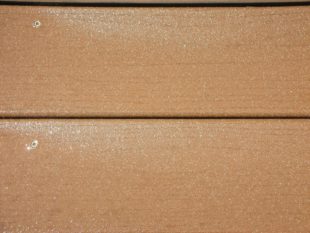
Corte LLC freely admits that sodium hypochlorite based products appear to quickly bleach out mold stains on composites when first used. Don't be fooled! The following photo is an example of what a composite deck (TREX®) looks like when sodium hypochlorite, the active ingredient in chlorine bleach and unscrupulous deck cleaners generally intended for only cleaning "mildew" (not the species of mold common on composites) has been repeatedly used. Notice how the sodium hypochlorite no longer bleaches out the mold stains. Notice how the composites are turning solid black, exacerbating the problem, making it take more time and cost more money to Corte-Clean® in the future. If this composite were wet, it would look much worse because water magnifies stains on composites.

Trex chlorine bleach sodium hypochlorite mold cleaning results

The second photo (below) left side shows how water magnifies mold stains after the mold staining problem has been exacerbated by the use of products containing sodium hypochlorite on this ChoiceDek®. Notice how the mold spots have grown into one massive mycelium of hyphae. The right side of this photo shows how Corte-Clean® will clean these stains when sodium hypochlorite no longer bleaches out the mold stains and the problem has been exacerbated.

ChoiceDek Mold Corte Clean Cleaning

These photos represent a classic example of why sodium hypochlorite should never be recommended or used to clean composites of mold. Additionally, the use of sodium hypochlorite to clean composites leads to many other safety and environmental issues. If you are still not convinced why sodium hypochlorite containing or mixed with products should not be used, keep on reading.

  • Toxic, Dangerous, Polluting & Unhealthy!
  • Generally Kills plants grass surrounding composites.
  • Pollutes Streams, Rivers, Lakes, Estuaries, or the Ocean and is not generally legal to let drain into these natural waterways.
    • Where do you think it all goes?
      • Read any reputable brand of chlorine bleach label directions to confirm.
        • Fines can be quite expensive or worse if caught by the authorities.
  • Off-Gasses unhealthy chlorine when used and after being used.
    • Unhealthy to breath, especially for the young, the elderly or those with Asthma, Bronchitis, Emphysema or other respiratory conditions.
    • Chlorine Is A Key Component Of Dioxin. Click Here For More INFO.
  • Extremely dangerous when accidentally or intentionally mixed with other cleaners such as; products that are dangerously/illegally mixed with chlorine bleach that contain; ammonia, ammonium, oxalic acid or when coming into contact with the chemicals commonly used to Treat Lumber that structurally support most composite decks, docks & fences.
  • Breaks down wood Lignin (Natural glue) that gives wood its strength including structural lumber that support most composites.
  • Causes Corrosion to Structural Metal Fasteners & Connectors (steel, galvanized & stainless) holding most composites together.
      • Leads to ugly stains that need to be cleaned with another expensive, time consuming and generally polluting chemical or expensive early replacement or failure.

Corrosion Results Chlorine Bleach Sodium Hypochlorite Structural Metal ChoiceDek Composite Deck

The above photo is of Sodium Hypochlorite Corrosion Stains to visible fasteners, What do you think it does to the structural connectors that are not generally visible? WARNING!!! DANGER!!!

  • Simpson Strong®-Tie Manufacturers Approximately 77% Of All Decking Hardware, Including Swan® Secure Fasteners, Clearly Disclose The "General Corrosion Risks" Of "cleaning products" Like Chlorine Bleach, Products Dangerously Mixed With Chlorine Bleach Or Cleaners Containing Sodium Hypochlorite.
  • USP® Structural Connectors manufactures much of the remaining metal decking hardware and clearly discloses Causes Of Corrosion From External Attack By Chemicals Like Chlorine Bleach, products dangerously mixed With chlorine bleach or cleaners containing sodium/calcium hypochlorite.
    • Why would any person or company manufacture, recommend or retail corrosive cleaning chemicals for cleaning decking when the chemical will likely come into contact with structural metal components, especially since the risks are so clearly disclosed?
  • GRK® Fasteners
    • "Chlorine based bleaches and cleaners are not recommended for most deck fasteners, our Climatek coated products included. Our PHEinox stainless steel fasteners can handle these harsh chemicals much better, but the use of such chemicals are not recommended in the first place; they are harsh on the decks themselves and joist hangers and other such deck hardware. I was re-reading some of the research we did into deck cleaners several years ago, and the non-chlorine, type cleaners proved best and least harmful to most fasteners."
  • Can affect the structural integrity of some composites.
  • Not Recommended By The United States Environmental Protection Agency (EPA) To Clean Mold.
  • Not Recommended By The United States Occupational Safety Health Administration (O.S.H.A.) To Clean Mold.
    • It is a violation of Federal (EPA) law to use a biocide in any manor inconsistent with label directions.
  • The History Channel Modern Marvels Episode "Mold & Fungus"
    • Premiere Date: 09/18/2008
      • Approximately 6 minutes 20 seconds into the episode.
    • "When cleaning mold of any size, there is at least one rule of thumb, the one I would say DON'T USE IS BLEACH, the bleach stays on the very surface , so when you do use bleach to clean it, bleach is always mixed in water, the water is doing more damage than the bleach is actually doing beneficial, first step is fix the problem, dry things out, kill it so it doesn't come back and then clean it with any house-hold cleaner that you want to use it with except bleach."
  • Oregon State University Scientific Study "Ability of bleach and other biocide treatments to remove and prevent mold growth"
    • Sapwood lumber is commonly used, in part, to make most composites.
    • Corte LLC has experienced these same results when using chlorine bleach and other biocide treatments to remove and prevent mold growth from composites.
      • Why would any person or company manufacture or recommend biocides such as chlorine bleach or other sodium hypochlorite based deck cleaners for cleaning mold when this chemical is scientifically proven to exacerbate mold growth on lumber commonly used to make composites?
  • Town Country Magazine SPECIAL GREEN ISSUE 4/2007 p.180 -Cited this source.
    • Chlorine bleach will evaporate within a short period of time, especially when it is used in hot temperatures and the composite surface is in direct sunlight. If the composite is not dry when the bleach evaporates, or moisture is still in the contaminated area on the composite (humidity, outside air dampness, etc.), the contamination process is re-started immediately and to a greater degree.
  • American Chemistry Council Chlorine Division (ACC)
    • You will find many legitimate uses for chlorine, the active ingredient in sodium hypochlorite, on the ACC website which is funded by the major producers. You will not find any information from the ACC for cleaning, killing or removing mold or mildew from any surface including composites. Why do you think this is?
  • Chlorine Online Information Resource
    • You won't find any information related to using chlorine to clean mold or mildew from the Chlorine Online Information Resource but you will find many other legitimate uses. They too are funded by the chlorine industry.
  • Not effective on Porous composite surfaces for cleaning mold.
    • For proof, read the label on chlorine bleach containers.
  • Not effective for cleaning Grease, Oil, Rust (Causes Rust) other common staining issues from composites.
  • Chlorine bleach and other sodium hypochlorite containing biocides generally loose most of their TOXIC strength through off-gassing of chlorine within the first three (3) to six (6) months after being manufactured, even in a new, unopened container.
    • One of our competitors, that contain sodium hypochlorite, clearly discloses their products Thirty-Five (35) Day shelf life.
  • Chlorine effects on Human Health  & the Environment according to the United States Environmental Protection Agency (EPA)
    • "Effects of chlorine on human health and the environment depend on how
      much chlorine is present and the length and frequency of exposure."
      • The average 300 Sq. Ft. composite deck, dock or fence generally takes several hours to chlorine bleach, especially when chlorine is routinely used on a "Semi-annual (Spring and Fall) cleaning" for "Mold & Mildew."
    • "Breathing small amounts of chlorine for short periods of time
      adversely affects the human respiratory system.  Effects range from
      coughing and chest pain to water retention in the lungs.  Chlorine
      irritates the skin, the eyes, and the respiratory system."
      • One usually gets a terrible chemical headache & uncontrollable runny nose when breathing chlorine.
        • Perhaps those of you whom have previously used chlorine have suffered these effects?
    • "Human health effects associated with breathing or otherwise consuming
      small amounts of chlorine over long periods of time are not known.  They
      are currently under investigation.  Some studies show that workers develop
      adverse effects from repeat inhalation exposure to chlorine, but others do
      not.  Laboratory studies show that repeat exposure to chlorine in air can
      adversely affect the immune system, the blood, the heart, and the
      respiratory system of animals."
      • Why do you think products containing chlorine recommend wearing an expensive NOSH approved gas mask, intended for chlorine, when using products containing this unhealthy chemical.
    • "Chlorine causes environmental harm at low levels. Chlorine is especially harmful to organisms living in water and in soil."
      • Why do you think products containing chlorine generally clearly state "Do not allow to drain into streams, rivers, lakes, estuaries or the ocean?"
        • Where do you think chlorine ends up when rinsed from composites?
          • Who suffers the penalty if caught?
            • You or the company or person recommending chlorine be used to clean composites?

Unfortunately, some continue to manufacture, recommend and sell toxic, corrosive, polluting and dangerous chlorine bleach or other sodium hypochlorite containing/mixed biocides cleaners to clean mold. Most recommend this chemical because of beliefs and not science or because they have been sold a product that initially appear to quickly bleach out the mold when first used. Nothing could be further from the truth. Use of sodium hypochlorite is scientifically proven to exacerbate mold growth. Its use does not kill or remove mold (dead mold can still be toxic) but is scientifically proven to help it grow. It does this by bleaching the mold out (so you think you have removed it).

In reality, its use makes the mold more resistant to the chlorine in sodium hypochlorite. Because most sodium hypochlorite containing products are generally 93.85-97% water, they actually give the microscopic mold spores and mold hyphae the moisture they need to live and grow, resulting in immediate re-growth. This allows the mold to grow throughout the composite in one massive mycelium, making the problem far worse and more difficult to clean in the future.

Repeat use of sodium hypochlorite will do damage to the structure supporting the composite, the environment and the health of anything living, except the mold. Cleaning recommendations of sodium hypochlorite containing/mixed with products are the #1 issue facing the entire composite industry. Poor cleaning recommendations are giving these great, generally environmentally responsible, longer lasting, alternative products a less than desirable reputation. This has lead to health/pollution/safety issues, federal law violations and the further depletion of our planets forests.

Hopefully, through our efforts, we will continue to educate composite owners, manufacturers, distributors and retailers, while getting every customer's composite clean, in an environmentally responsible manor, without all the known risks of sodium hypochlorite and teaching them how to keep it that way at a minimal cost with minimal effort, especially when it comes to mold stains.

Results chlorine bleach sodium hypochlorite clean mold composite
Photo of composite deck previously cleaned with chlorine bleach by an employee. The composite is still wet. See the black mold?

Veranda results chlorine bleach sodium hypochlorite cleaning mold composite deck
Same composite deck approx. 2 weeks later. Composite is dry. See the mold returning?

Results chlorine bleach sodium hypochlorite cleaning mold composite deck wet
Same composite deck (as above photo). Composite is wet with water. Water magnifies stains on composites. Will you be another victim of what is commonly known in the scientific community as; The Chlorine Bleach Scam?

Corte Clean Results
Same composite deck/spot after being Corte Cleaned! Composite is wet with water.

Print  

Survey

Does it upset you that some companies continue to manufacture, sell & recommend cleaning chemicals that contain sodium hypochlorite when so many risks & liabilities are known?


Submit Survey  View Results
Print  

Why is Corte-Clean® Better?

It is developed exclusively for cleaning composite decks, docks, and fences of stains caused by Mold & Mildew, Grease, Oil, Rust, BBQ and just about anything else staining a composite surface.

  • Less expensive than purchasing & using up to 3-4+ other time consuming cleaning chemicals/products for specific staining issues, without all the risks.
  • No overwhelming unhealthy toxic chemical smell or Off-Gassing.
  • Safer than chlorine bleach, products to be mixed with chlorine bleach, or products containing sodium hypochlorite or oxalic acid based cleaners without all the risks.
  • No need to dangerously/expensively/illegally add expensive chlorine bleach.
  • Non-Polluting like cleaners containing phosphates (TSP, Phosphoric Acid, Etc.)
  • 100% Biodegradable, Eco-Responsible "GREEN" alternative that is safe and legal to drain into streams, rivers, estuaries, lakes, bays & the ocean.
  • Non-Corrosive to structural metal; actually protects it.

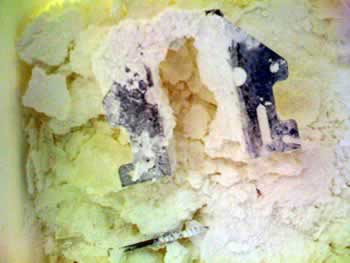
Photo of Simpson Strong-Tie® & Swan® Stainless steel screw soaked in Corte*Clean® at maximum strength until all water/moisture has evaporated. Don't try this with a sodium hypochlorite containing or mixed with products. It might scare you if you have previously used this corrosive chemical to clean your composite where metal structurally supports & holds it together! These items are very expensive to replace and we all know what happens when they fail.

  • Safe & Easy to ship worldwide without water weight shipping charges or expensive H.A.Z.M.A.T. shipping charges.
  • Up to an 18 month shelf life if stored in dry, cool, place with bag securely closed.

  • Restores some composites color that have fully weathered or been bleached by sodium hypochlorite based products. 

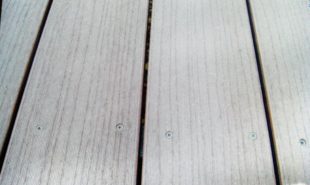
Photo of weathered composite deck where composite has been Corte Cleaned on center board. Notice how the composites original color was brown or beige. The composite will stay this color until it weathers back to gray. This is a great indicator of when a composite needs to be re-Corte Cleaned.

Now that you are educated on the many benefits of Corte*Clean® and the many problems of other chemicals, call the manufacturer of your composite and point them out, especially if they are recommending chemicals that pollute and pose so many other risks and liabilities to unsuspecting consumers. Your efforts will likely save others from wasting time & money on numerous products that don't work or worse, while helping our environment. Hopefully, once you have used Corte*Clean®, you will send Corte LLC a testimonial, as so many others have done. Corte LLC will forward these testimonials to the noted composite manufacturer, especially if they are not recommending Corte*Clean®.

Print  

test survey

Does the use of Chlorine Bleach or other sodium hypochlorite based biocides for cleaning mold from composites present significant risks that can be very expensive if the owner or an employee is caught or worse? Can the previous use of sodium hypochlorite based products cause corrosion to structural metal supporting composites and ultimately cost more money in the future? Can sodium hypochlorite, oxalic acid & phosphates exacerbate mold issues?


Submit Survey  View Results


CLICK HERE to go to the Corte Clean® "FAQ" page.

CLICK HERE to go to the Corte Clean® "FAQ" page.

Print